
Why this works
The whole world is chemistry
Why does a fizzy tablet fizz? How does milk become cheese? Why does a bike rust? Chemistry is everywhere — in the kitchen, the bathroom and in nature. But elementary school barely touches it, while these are exactly the years to feed that curiosity.
BrainBite starts with what your child sees around them, with short lessons about substances, reactions and mixtures. Every theme is built up in small steps with cheerful illustrations and instant explanations. Going well? Then it gets more challenging. Still tricky? Then it comes back later in a different form — until it sticks.
How learning chemistry works with BrainBite
No memorizing from a textbook — lessons that move with your child.
Adaptive level
A seven-year-old discovers solid, liquid and gas; a twelve-year-old understands atoms and the periodic table. Lessons grow along.

Professor BrainBite helps
A question about atoms, rust or why soap works? The professor explains it in plain language, with examples from the kitchen. As often as needed.

Calm learning
Focus Mode removes everything that distracts: one exercise at a time, at your child's own pace. Great for every kid, especially with ADHD or dyslexia.
Try it yourself: the mini chemistry quiz
Three questions, instant explanations. That's what learning in BrainBite feels like. Try it together with your child.

Question 1 of 3
Boiling water turns into…
Themes your child will explore
Every course is made of short modules with their own illustrations, quizzes and fun facts.
Matter & states
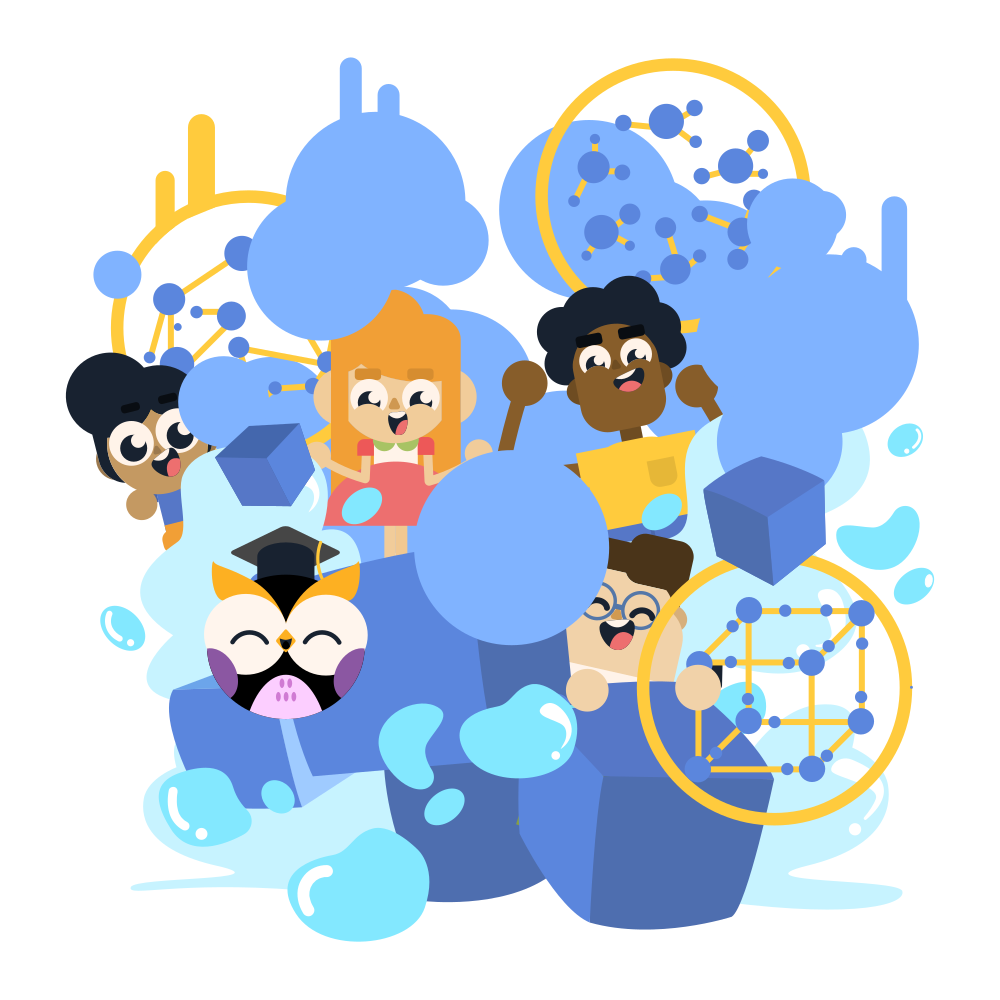
Solid, liquid or gas: why does ice melt, and where does water go when it boils? Everything is matter.
Elements & the periodic table
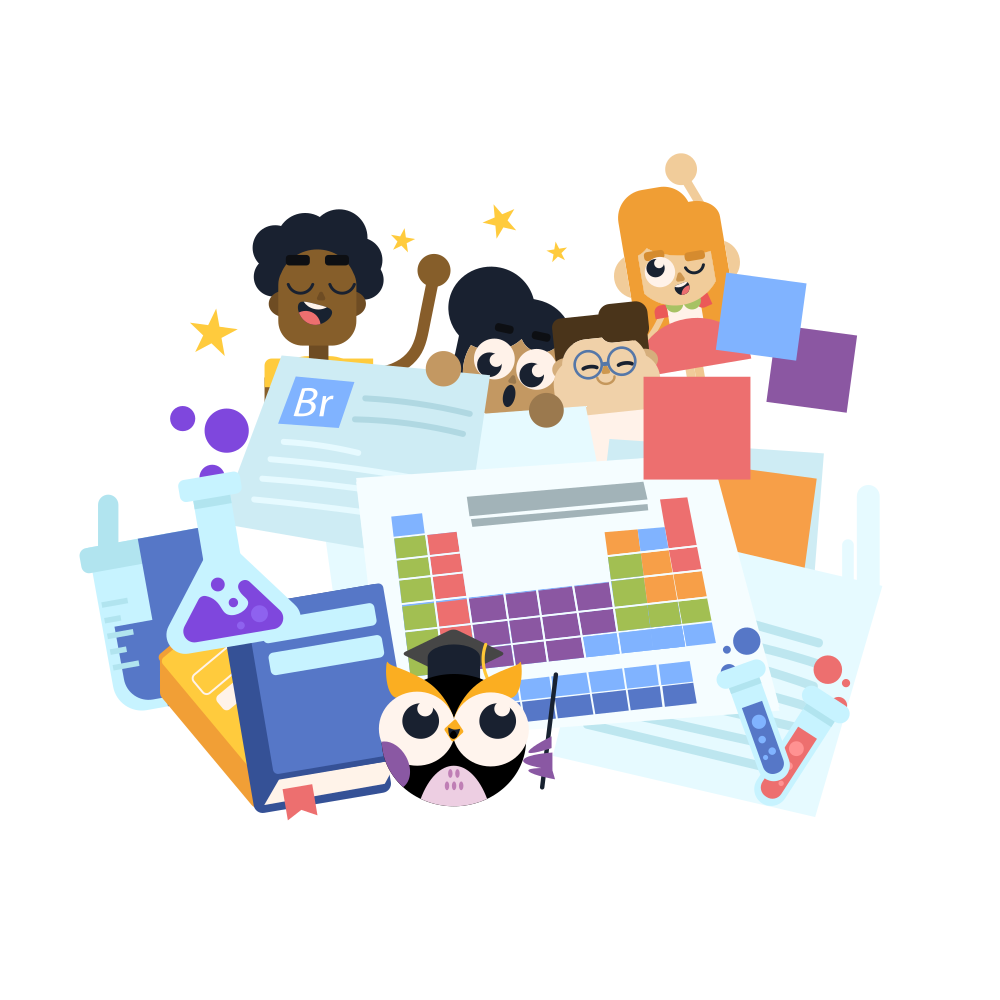
The building blocks of everything around us — and the famous table where they all fit.

Chemical reactions
Baking, rusting, burning: when substances turn into something new — and how to spot it.
Solutions & mixtures
Why does sugar dissolve in tea while sand doesn't? Mixing, dissolving and separating again.
Acids & bases
From lemon juice to soap: what acidic and basic mean, and how the pH scale works.
The history of chemistry
From alchemists trying to make gold to Marie Curie: the discoverers behind the science.
Also practice: math · spelling · reading · science · biology · space · history · physics · geography
Chemistry in everyday life: the lab is just your kitchen
Why does a cake rise? How does soap clean your hands? What does toothpaste actually do? In the everyday chemistry course your child discovers that every day is full of chemistry — from cooking and cleaning to medicine and nature. Looking at the world becomes an experiment.
Get started
Did you know…?
Four fun facts from the lessons. Perfect to share at the dinner table.
You are made of stardust
Almost all elements in your body, like the iron in your blood, were once made inside stars.
Honey never spoils
Honey found in pharaohs' tombs was 3,000 years old and still edible. Bacteria don't stand a chance.
Hot water sometimes freezes faster than cold
It sounds impossible, but it really happens. It's called the Mpemba effect — and scientists are still puzzling over it.
Fireworks are pure chemistry
Every color comes from a different element: copper makes blue, strontium red and sodium yellow.
Questions about learning chemistry
What parents ask us most. Short answers, no fluff.
The chemistry courses are for kids aged 6 to 13. BrainBite mainly looks at what your child can already do — a young child discovers solid, liquid and gas, an older child understands atoms and the periodic table.
No. The lessons start with what your child already knows: cooking, rust, fizzy tablets. From there they build up step by step. Chemistry isn't an abstract subject, but an explanation of the world around you.
Among others: intro to chemistry, matter and states, elements and the periodic table, chemical reactions, solutions and mixtures, acids and bases, chemistry in everyday life, and the history of chemistry.
Yes. The themes line up with elementary science topics and give a head start for chemistry in middle school. And since elementary school barely covers it, this is a lovely way to go deeper at home.
No. Every module starts with an explanation in plain language, with cheerful illustrations. Then come questions that are explained right away. Professor BrainBite also answers your child's own questions.
Yes, your first 7 days are free. Not a fit? Cancel within those 7 days and pay nothing. 7-day free trial. 14-day money-back guarantee.

Ready to take a bite?
Start exploring chemistry today. Ten minutes a day, at your child's level.
Try 7 days freeCancel anytime — pay nothing within the first 7 days.
7-day free trial · 14-day money-back guarantee