
Why this works
More than memorizing maps
Why does it rain? Why do so many people live in cities? Why do other countries celebrate different holidays? Geography is about the world your child lives in — but at school it often shrinks to memorizing place names.
BrainBite goes bigger, with short lessons about weather, water, cultures and how countries work together. Every theme is built up in small steps with cheerful illustrations and instant explanations. Going well? Then it gets more challenging. Still tricky? Then it comes back later in a different form — until it sticks.
How learning geography works with BrainBite
No memorizing from a textbook — lessons that move with your child.
Adaptive level
A seven-year-old discovers weather and seasons; a twelve-year-old understands the water cycle and world politics. Lessons grow along.

Professor BrainBite helps
A question about hurricanes, glaciers or why it always rains at grandma's? The professor explains it in plain language, with examples. As often as needed.
Calm learning
Focus Mode removes everything that distracts: one exercise at a time, at your child's own pace. Great for every kid, especially with ADHD or dyslexia.
Try it yourself: the mini world quiz
Three questions, instant explanations. That's what learning in BrainBite feels like. Try it together with your child.

Question 1 of 3
Which continent is the biggest?
Themes your child will explore
Every course is made of short modules with their own illustrations, quizzes and fun facts.

The weather
Sun, wind, clouds and rain: where does weather come from, and why is the forecast (usually) right?
Extreme weather
Hurricanes, tornadoes and heat waves: how extreme weather forms and how people protect themselves.
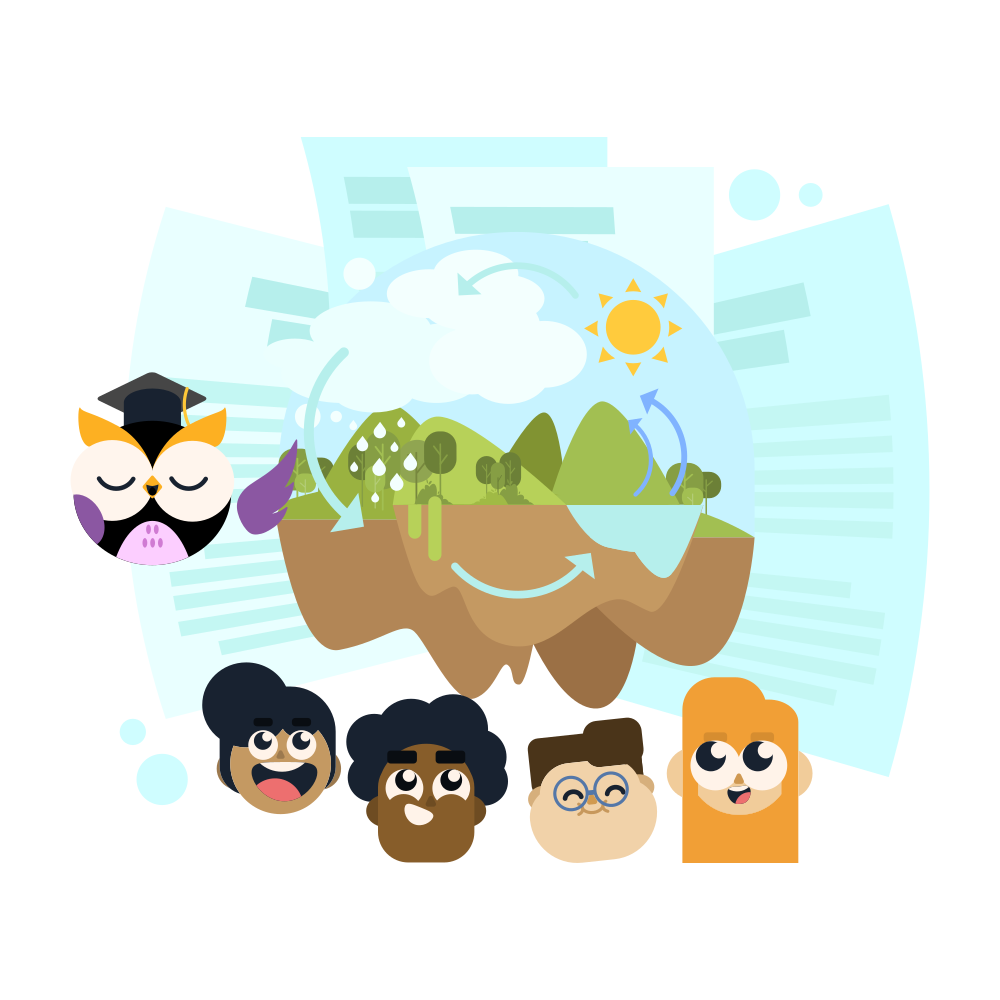
The water cycle
From sea to cloud to rain and back: the endless journey of water — and why it never stops.
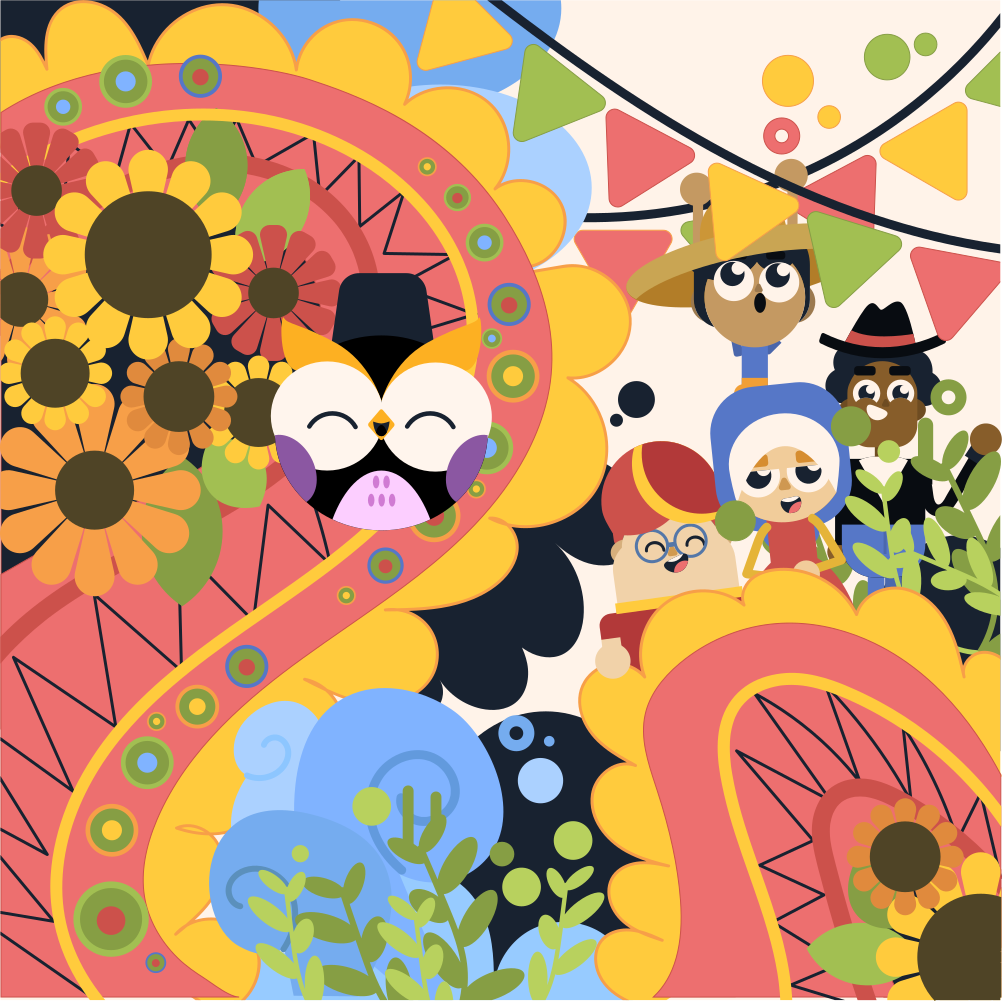
Cultures around the world
Festivals, languages, food and customs: how people live all over the world — different and surprisingly alike.
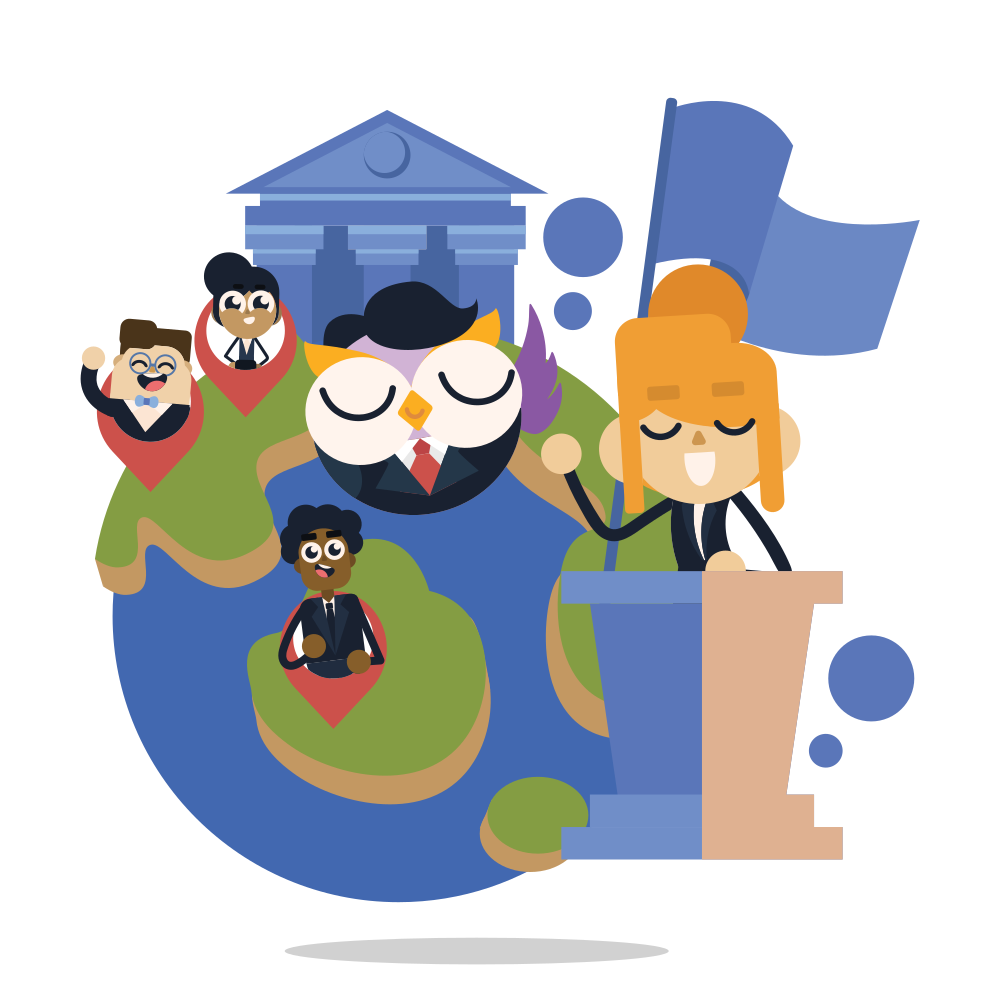
Countries & world politics
Why are borders where they are? And how do countries work together? The world map, explained at kid height.
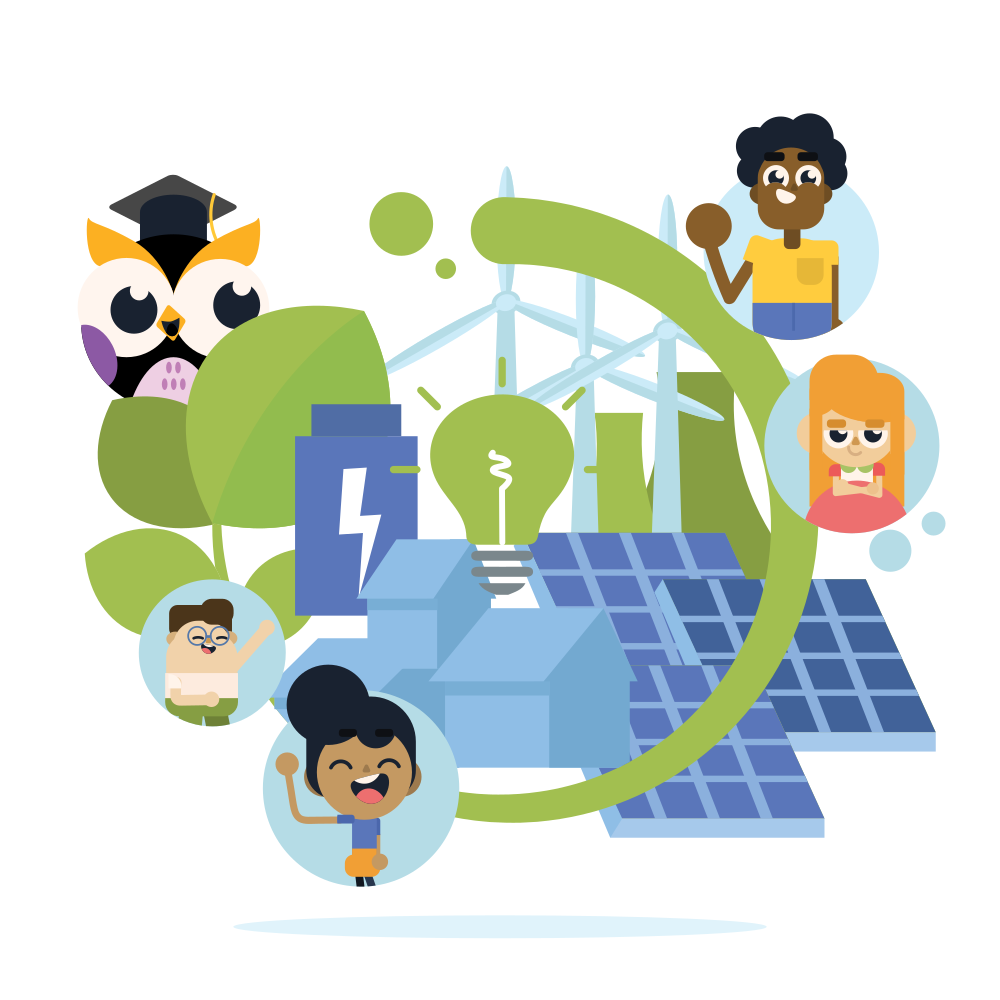
Environment & sustainability
Climate, waste and energy: what's happening to the Earth and why caring for the planet matters to everyone.
Also practice: math · spelling · reading · science · biology · space · history · chemistry · physics
Sustainable solutions: what can YOU do for the Earth?
Big problems can feel overwhelming when you're eight. That's why the environment course doesn't end with worries, but with solutions: from solar panels and wind turbines to what your child can do themselves. Caring for the planet becomes something to be proud of — not a source of stress.
Get started
Did you know…?
Four fun facts from the lessons. Perfect to share at the dinner table.
Antarctica is a desert
Deserts aren't about heat but about dryness — and hardly any rain or snow falls there. The coldest place on Earth is also one of the driest.
The Sahara was once green
Thousands of years ago the biggest desert was a green landscape with lakes, hippos and fishermen.
Over 7,000 languages are spoken
Papua New Guinea alone has about 800. And every language has words that exist nowhere else.
You float by yourself in the Dead Sea
The water is so salty that you can't sink. Reading a book while floating? Totally possible there.
Questions about learning geography
What parents ask us most. Short answers, no fluff.
The geography courses are for kids aged 6 to 13. BrainBite mainly looks at what your child can already do — a young child discovers weather and seasons, an older child understands the water cycle and world politics.
Ten to fifteen minutes is enough. Short daily learning moments work better than one long session a week — exactly what the lessons are built around.
Among others: the weather, extreme weather, the water cycle, cultures around the world, countries and world politics, and environment and sustainability. Every theme consists of short modules with their own illustrations.
No, it's the story around the map: why cities are where they are, how weather works and how countries connect. That context is exactly what makes map facts at school easier to remember.
Yes. The themes line up with elementary geography and social studies topics. Great as preparation for a class presentation or project, and a lovely way to go deeper at home.
Yes, your first 7 days are free. Not a fit? Cancel within those 7 days and pay nothing. 7-day free trial. 14-day money-back guarantee.

Ready to take a bite?
Start exploring the world today. Ten minutes a day, at your child's level.
Try 7 days freeCancel anytime — pay nothing within the first 7 days.
7-day free trial · 14-day money-back guarantee