
Why this works
Big questions deserve good answers
How far away is the moon? What is a black hole? Would the sun fit in our street? Few subjects make kids as curious as space — and few subjects get as little time at school.
BrainBite takes those questions seriously, with short lessons about the solar system, stars, space missions and the Big Bang. Every theme is built up in small steps with cheerful illustrations and instant explanations. Going well? Then it gets more challenging. Still tricky? Then it comes back later in a different form — until it sticks.
How exploring space works with BrainBite
No memorizing from a textbook — lessons that move with your child.
Adaptive level
A seven-year-old gets to know the planets; a twelve-year-old learns how stars are born. Lessons grow with your child's age and level.

Professor BrainBite helps
A question about black holes, rockets or Saturn's rings? The professor explains it in plain language, with examples. As often as needed.
Calm learning
Focus Mode removes everything that distracts: one exercise at a time, at your child's own pace. Great for every kid, especially with ADHD or dyslexia.
Try it yourself: the mini space quiz
Three questions, instant explanations. That's what learning in BrainBite feels like. Try it together with your child.

Question 1 of 3
Which planet is closest to the sun?
Themes your child will explore
Every course is made of short modules with their own illustrations, quizzes and fun facts.
The solar system
Eight planets around one star: from scorching Mercury to freezing Neptune. And where does Earth fit in?
The moon
Why does the moon change shape? And how does it pull on the sea? Our neighbor in space, up close.
Stars & galaxies
How is a star born, and how does it die? Travel through the Milky Way and beyond.
Comets & asteroids
Shooting stars, comet tails and space rocks: the small stuff of the universe, with big stories.
Space missions
From the first rocket to the ISS and robots on Mars: how humans explore space.
The Big Bang
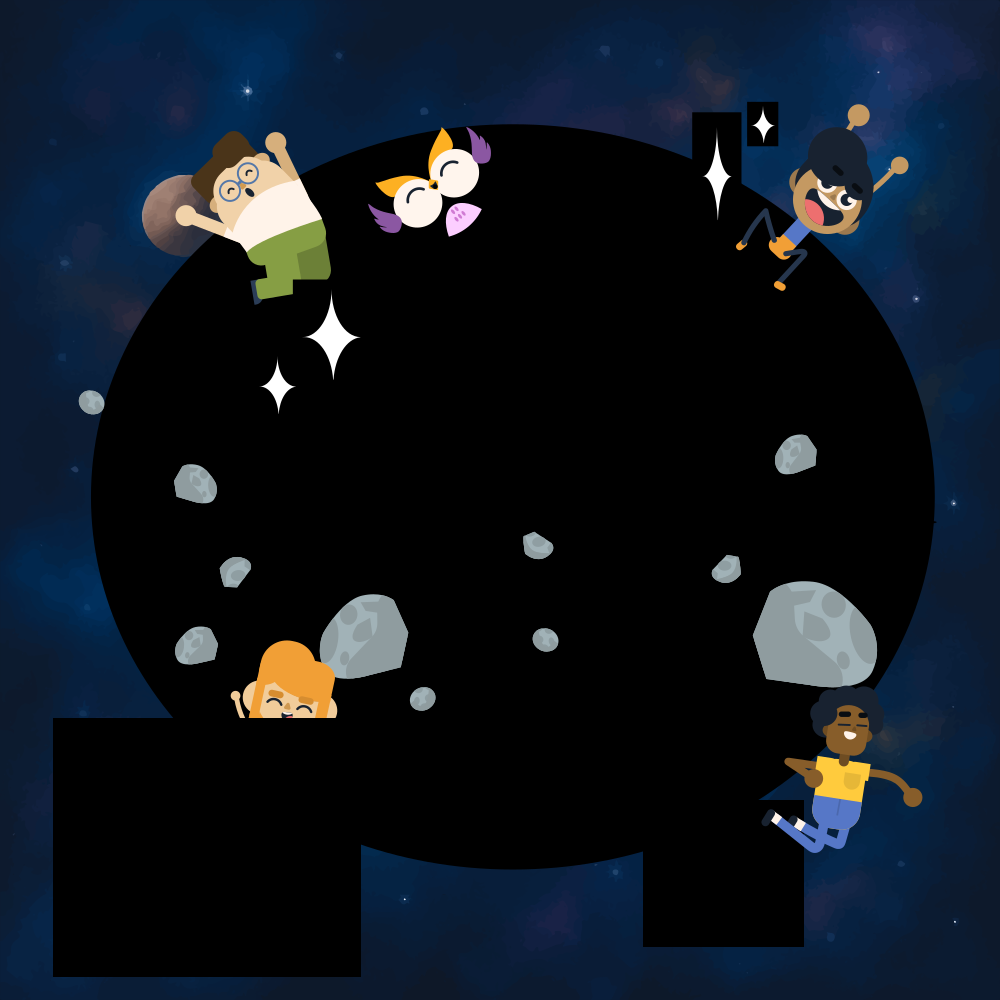
How did everything begin? The story of the universe, from the very first second until now.
Also practice: math · spelling · reading · science · biology · history · chemistry · physics · geography
The space race: how humans reached the moon
Two countries, one goal: reach the moon first. In the space race course your child relives the most exciting race in history — from Sputnik and Yuri Gagarin to the first footstep on the moon. With true stories and inventions we still use every day.
Get started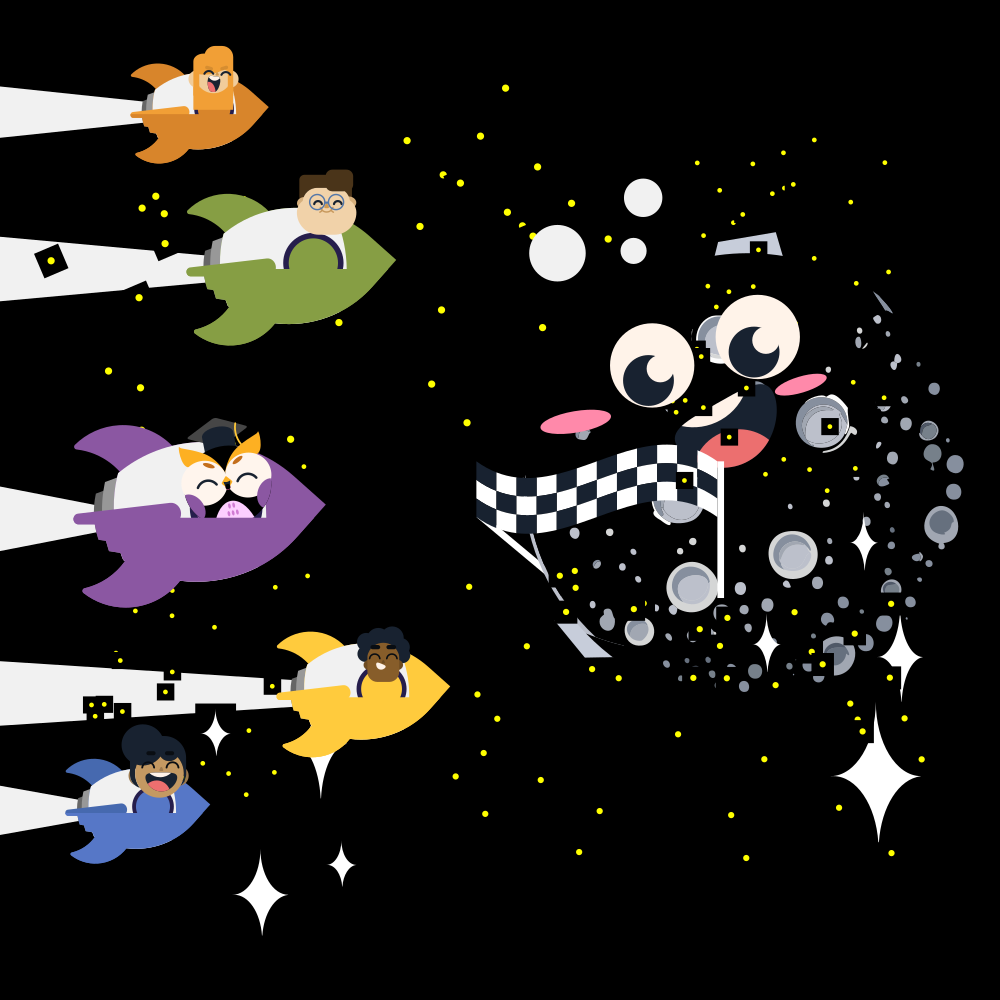
Did you know…?
Four fun facts from the lessons. Perfect to share at the dinner table.
A million Earths fit inside the sun
Over a million, actually. And yet the sun is only a medium-sized star — some stars are far, far bigger.
A day on Venus lasts longer than a year
Venus spins so slowly that one day there takes longer than a full trip around the sun.
Space is completely silent
Sound needs air to travel, and in space there is no air. Even an exploding star makes no sound at all.
Footprints on the moon stay forever
There's no wind or rain on the moon. The astronauts' footprints will stay visible for millions of years.
Questions about learning space
What parents ask us most. Short answers, no fluff.
The space courses are for kids aged 6 to 13. BrainBite mainly looks at what your child can already do — a young child gets to know the planets, an older child learns how stars are born and what the Big Bang is.
Ten to fifteen minutes is enough. Short daily learning moments work better than one long session a week — exactly what the lessons are built around.
Among others: intro to space, the solar system, the moon, stars and galaxies, comets and asteroids, space missions, the space race, the Big Bang, and the history of astronomy.
Yes. The themes line up with elementary science topics. And since space often gets only a brief mention at school, this is a lovely way to go deeper at home.
No. Every module starts with an explanation in plain language, with cheerful illustrations. Then come questions that are explained right away. Professor BrainBite also answers your child's own questions.
Yes, your first 7 days are free. Not a fit? Cancel within those 7 days and pay nothing. 7-day free trial. 14-day money-back guarantee.

Ready to take a bite?
Start exploring space today. Ten minutes a day, at your child's level.
Try 7 days freeCancel anytime — pay nothing within the first 7 days.
7-day free trial · 14-day money-back guarantee