
Play a round
Free practice, no account needed. Choose a calm or timed round.
This short question set is the same for every age.
 History

How would you like to practise? You can always switch.
Choose your round
Why this works
Not dates, but stories
How did the Egyptians build the pyramids? What did knights eat? History is full of stories that put kids on the edge of their seat, as long as they're told well. Memorising loose dates doesn't work; the why and the how are what stick.
That's why BrainBite tells history as a story, with short lessons about civilisations, empires and revolutions and the people behind them. Story first, then the evidence: your child puts events in order, traces causes and consequences and compares sources. Every theme is built up in small steps with cheerful illustrations and instant explanations. Going well? Then it gets more challenging. Still tricky? Then it comes back later in a different form, until it sticks.
How learning history works with BrainBite
No memorising from a textbook, just lessons that move with your child.

Adaptive level
A ten-year-old puts the first cities and the pharaohs on a timeline; a thirteen-year-old compares sources about empires and revolutions. Lessons grow along.
Explore with Napoleon
In BrainBite, mentor Napoleon Bonaparte, an AI character inspired by the French emperor, guides your child through stories from the past. He asks about choices and consequences and helps them look at events from different sides.
Calm learning
Everyone Mode removes everything that distracts: one exercise at a time, at your child's own pace. Great for every kid, especially with ADHD or dyslexia.
Themes your child will explore
Every course is made of short modules with their own illustrations, quizzes and fun facts.
The first farmers and cities
Why did people start farming? From the first villages to the cities of Mesopotamia, the Nile, the Indus and China, where writing began too.
Kingdoms and trade
Monasteries and Vikings, Baghdad’s House of Wisdom, the Hanseatic League and Mansa Musa’s golden empire: how rulers governed and trade connected the world.
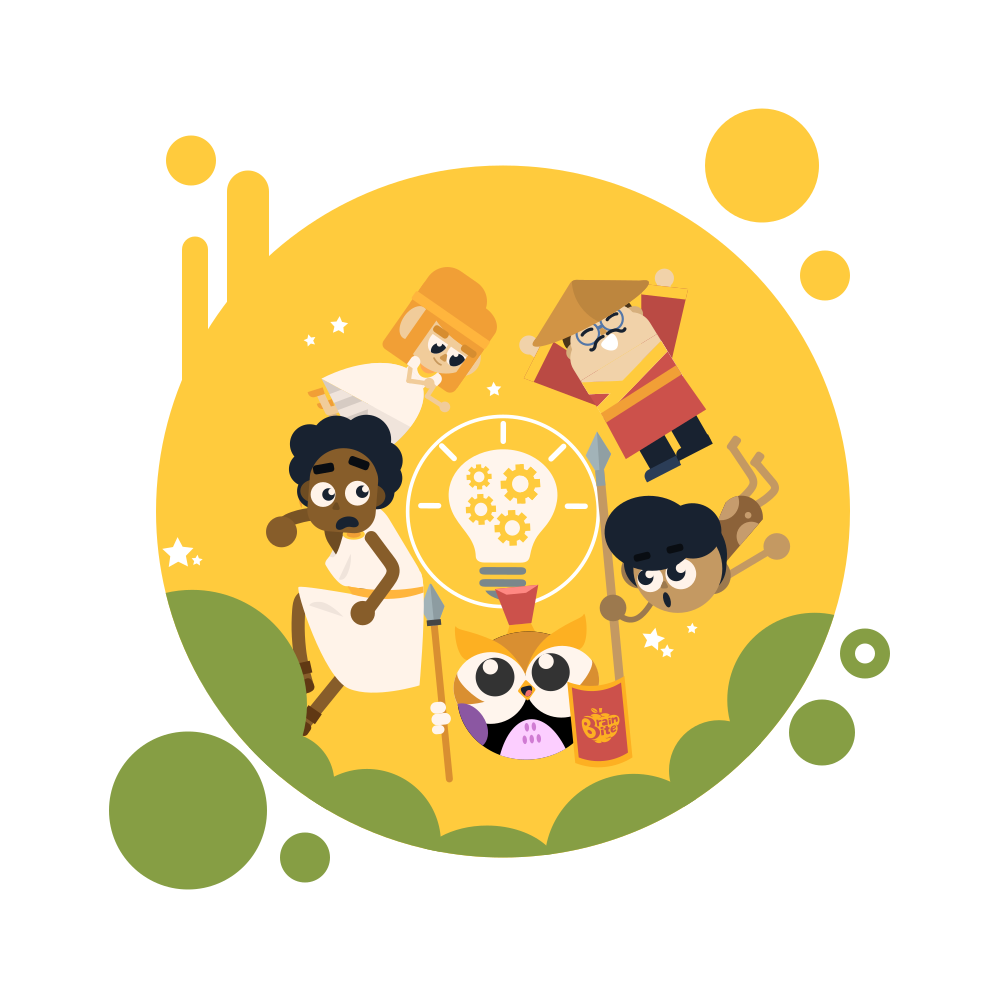
The Renaissance
The printing press, new ideas and the first scientists: what was reborn, and who got left out?
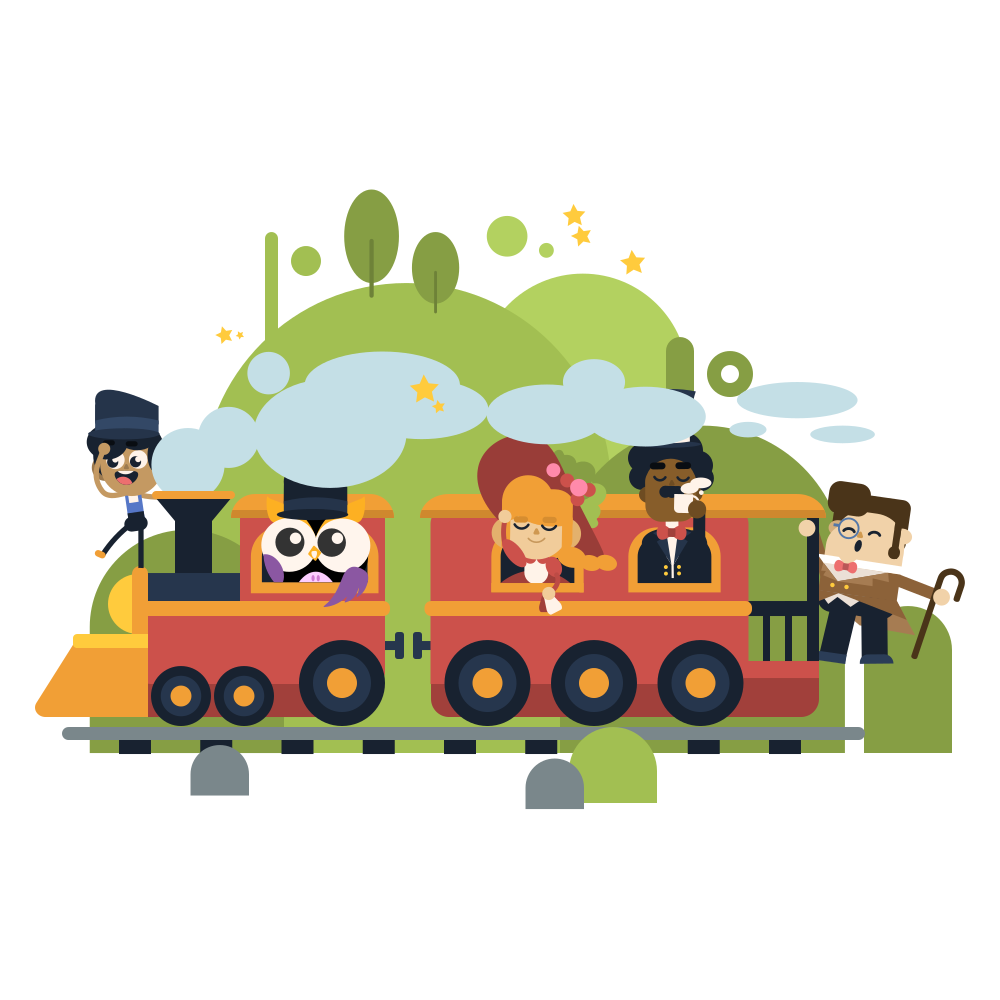
Revolutions
Revolutions around the Atlantic, the fight against slavery and factories full of machines and children: who won freedom, and who did not?
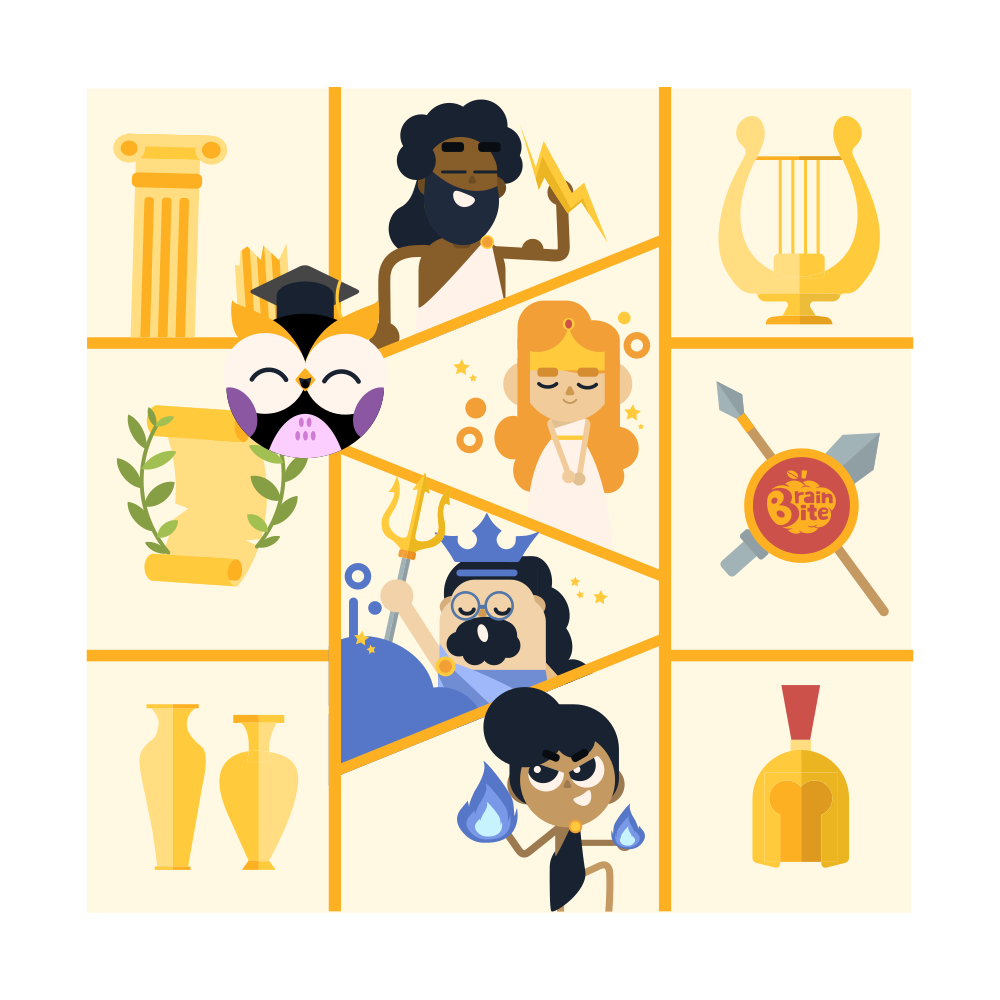
Greece and Rome
Athens and Sparta, the Persian Wars, Alexander the Great and Rome’s empire: what did they leave behind?
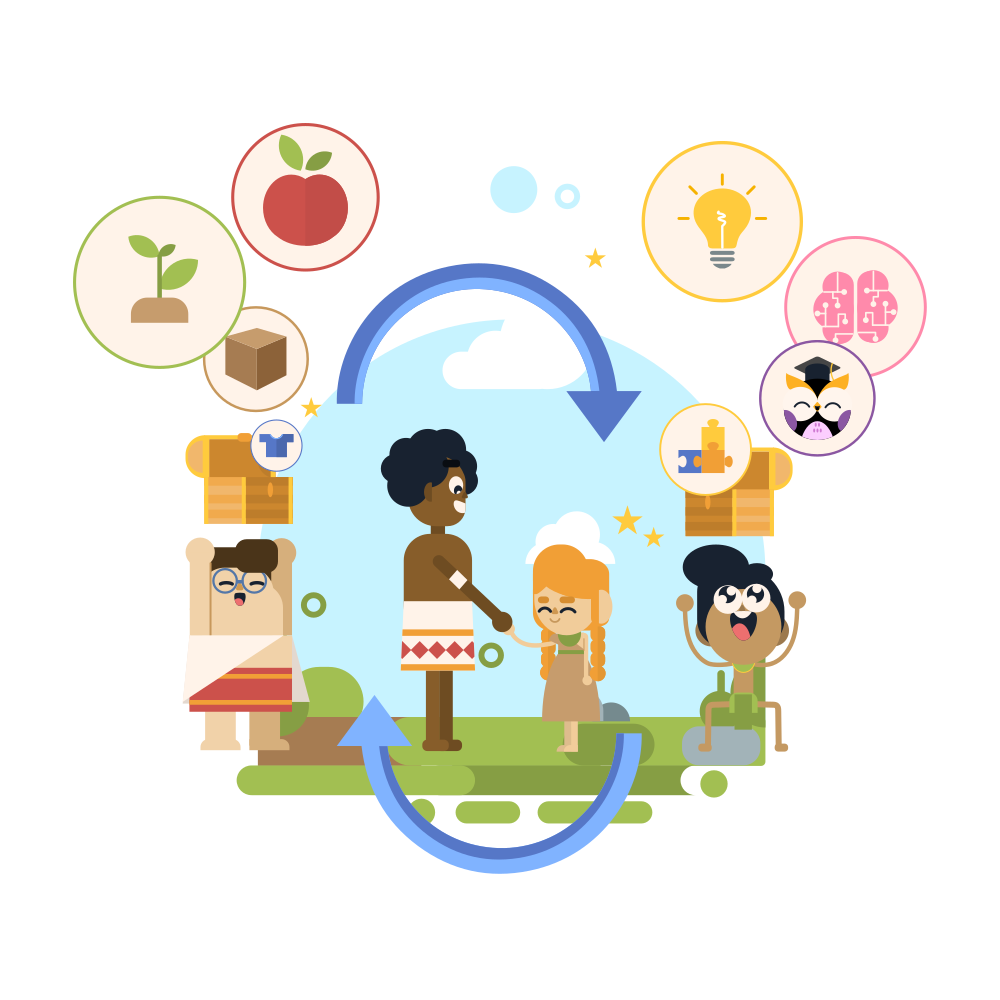
Voyages and empires
Why cross an ocean? Trade, the Atlantic system of enslavement, colonial rule and resistance to empire.
Also practise: maths · spelling · reading · science · biology · space · geography
The world wars and after
Your child’s grandparents grew up hearing their own parents’ stories of the war. In the Wars world your child finds out why two world wars began, what choices people faced under occupation and how colonies won their independence. Your child also learns to place events on a timeline. Suddenly ‘the old days’ mean something.
Get started
Did you know…?
Four fun facts from the lessons. Perfect to share at the dinner table.
Cleopatra lived closer to us than to the pyramids
When Cleopatra became queen, the pyramids were already 2,500 years old. The moon landing is closer to her time than the pyramids' construction.
Vikings didn't wear horned helmets
That image was invented later, for an opera. Real Viking helmets were smooth, because horns would just get in the way.
The Middle Ages lasted a thousand years
From about 500 to 1500. A knight from the start and one from the end would barely have recognised each other.
The Silk Road was over 6,000 kilometres long
Camel caravans took months to cross it. Besides silk and spices, inventions like paper travelled along too.
Questions about learning history
What parents ask us most. Short answers, no fluff.
The history courses are written for kids aged 10 to 13. BrainBite mainly looks at what your child can already do: first your child puts events on a timeline, later they compare sources and eras.
15 minutes a day, 3 to 5 times a week, is enough. Short, regular learning moments work better than one long session a week, and that's exactly what the lessons are built around.
Fourteen worlds, from deep time and the first farmers to empires, revolutions and the world wars: Timeline, Origins, Farmers, Cities, Greece, Rome, Kingdoms, Trade, Renaissance, Voyages, Revolutions, Empire, Wars and Britain.
Yes. The themes line up with history at the end of primary school and the first years of secondary school. Great as preparation for a class presentation or project, and a lovely way to go deeper at home.
Napoleon Bonaparte: an AI character inspired by the French emperor (1769 to 1821). He guides your child through stories from the past, asks about choices and consequences and helps them look at events from different sides, so history truly comes alive.
Yes, your first 7 days are free once per parent account. Not a fit? Cancel during your eligible trial to avoid the plan charge. Add-ons are charged today. 7-day free trial once per parent account. 14-day money-back guarantee.

Ready to take a bite?
Start exploring history today. 15 minutes a day, 3 to 5 times a week, at your child's level.
View plansCancel during your eligible trial to avoid the plan charge. Add-ons are charged today.
7-day free trial · 14-day money-back guarantee