Maths
- Long multiplication and long division
- Fractions and decimals, and how they link
- Bar charts, line graphs and pie charts
- Mean, median, mode and range
- Angles, shapes, perimeter and area
- Converting units of length, mass and capacity
Year 6 practice at home starts with knowing what your child learns this year. It is the last year of primary school for most children. The key stage 2 tests take place in May. Below you see what matters, subject by subject.
Every subject has a free first lesson. Pick one and start today.
Year 6 brings everything from primary school together.
In maths, your child uses long multiplication and long division. Charts, graphs and averages are new. In English, the past tense gets a lot of attention, including irregular verbs. Writing grows with words like although, however and therefore. In May, the key stage 2 tests check reading, grammar, spelling and maths. Calm, regular practice helps more than cramming.
In England, the key stage 2 tests are normally in May. They cover English reading, grammar, punctuation and spelling, and maths. Teachers also assess writing and science. You get the results in July.
Keep it short and regular. Ten calm minutes beat an hour of stress.
Pick one topic a week, like long division or the past tense.
Let your child explain how they worked it out. You will see where they get stuck.
Each lesson takes a few minutes. A mentor explains every step at your child's pace. The explanation adapts to your child. As a parent, you see what goes well and what needs more practice.
Print a worksheet and practise together on paper. Each one has an answer sheet.
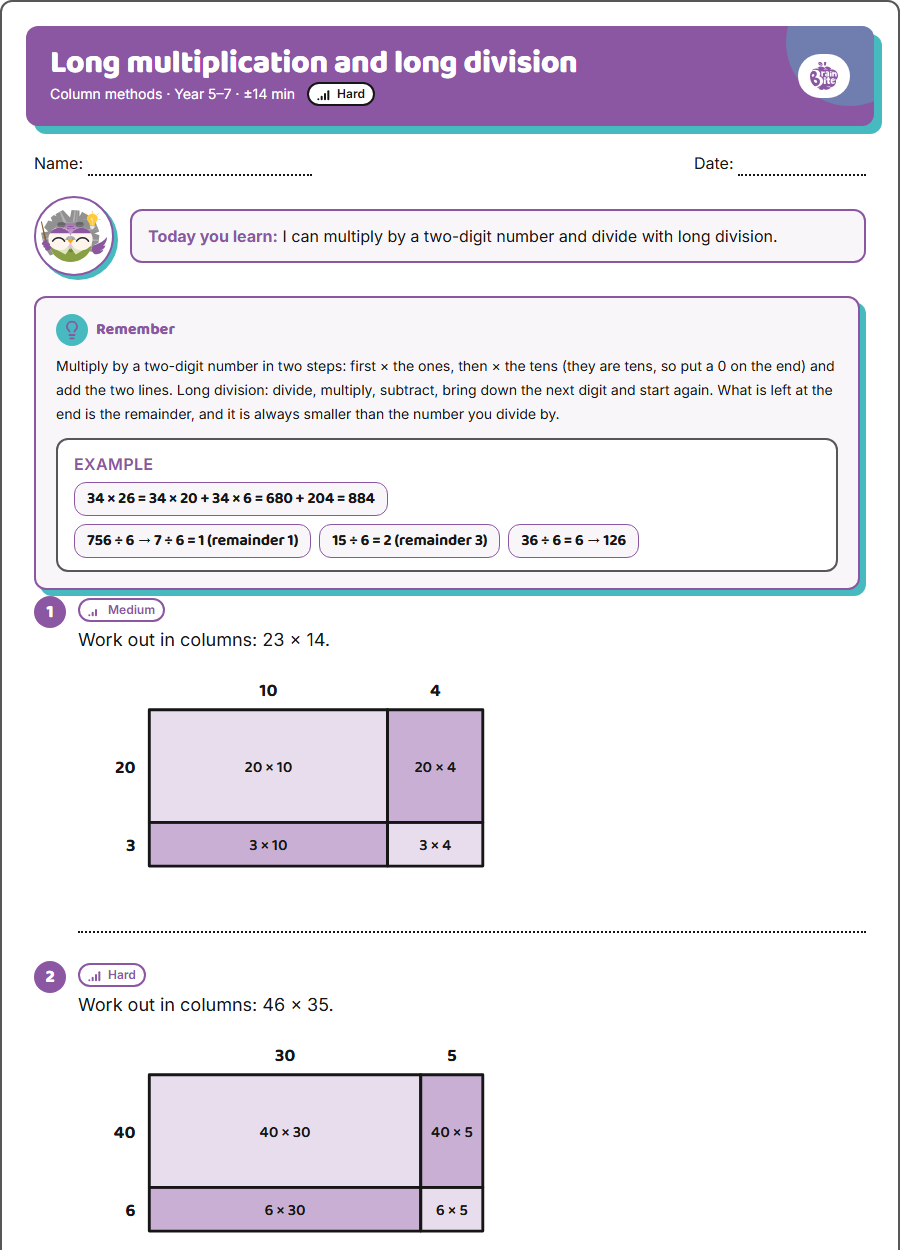
You multiply by a two-digit number and use long division.
Download the worksheetPDF, with an answer sheet for you.
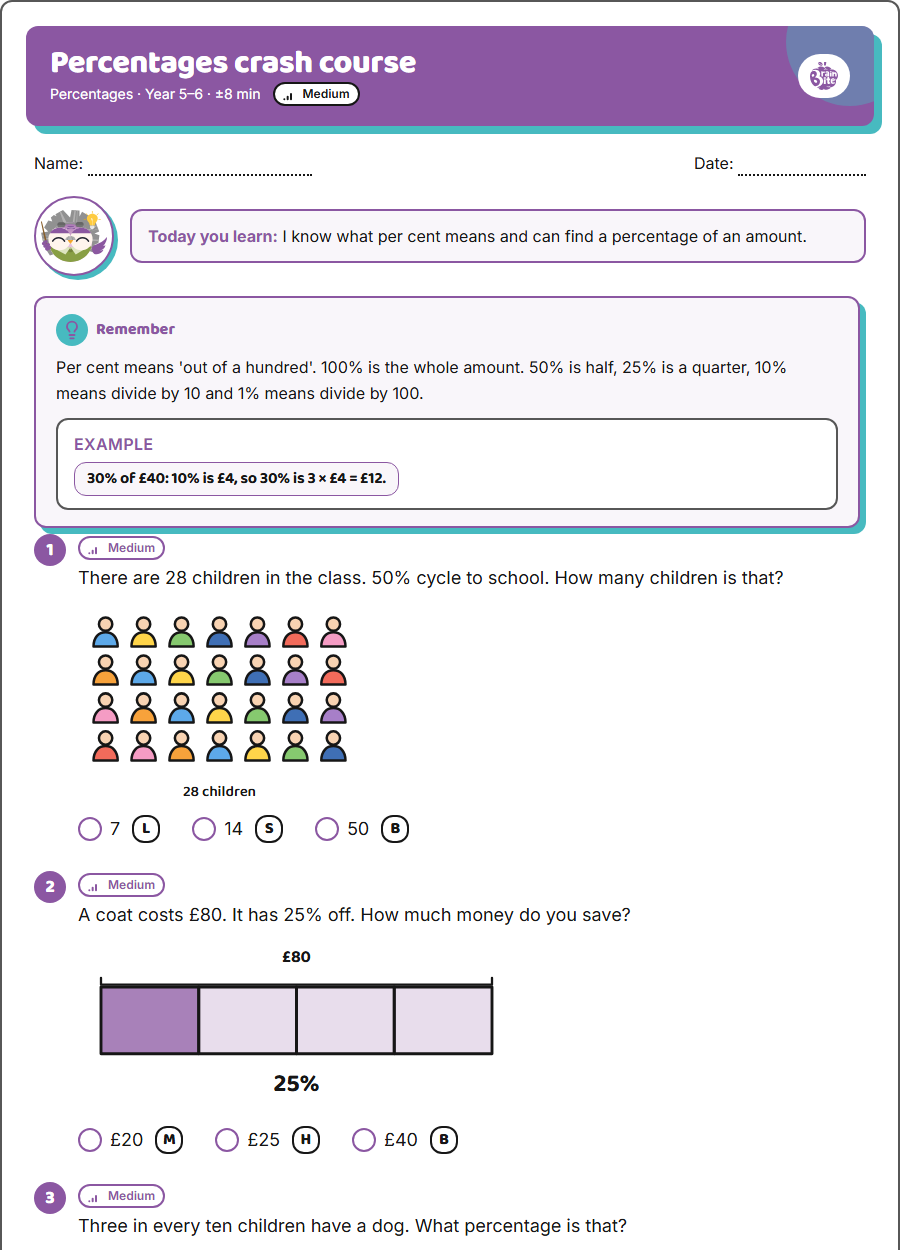
You know what per cent means and find a percentage of an amount.
Download the worksheetPDF, with an answer sheet for you.
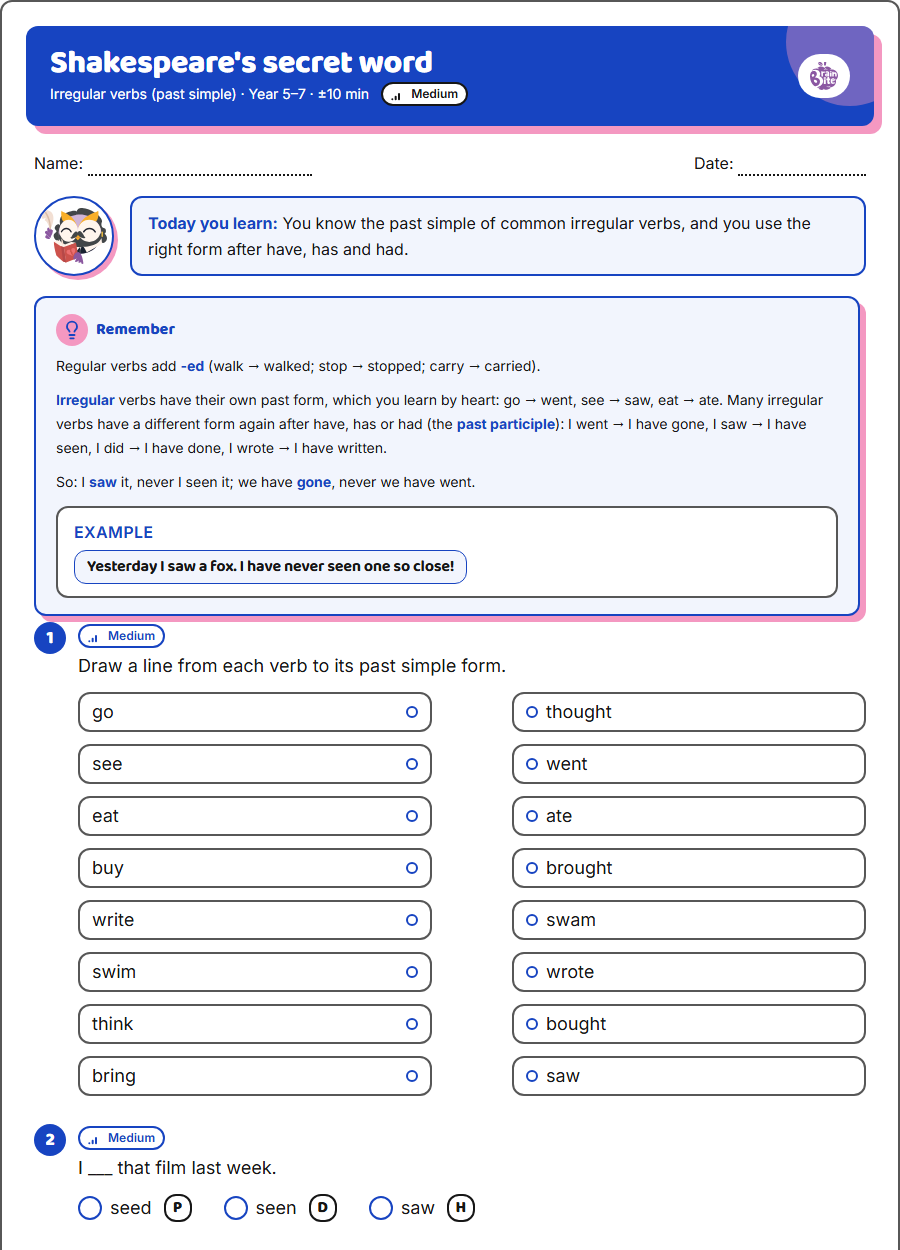
You use the past forms of common irregular verbs.
Download the worksheetPDF, with an answer sheet for you.
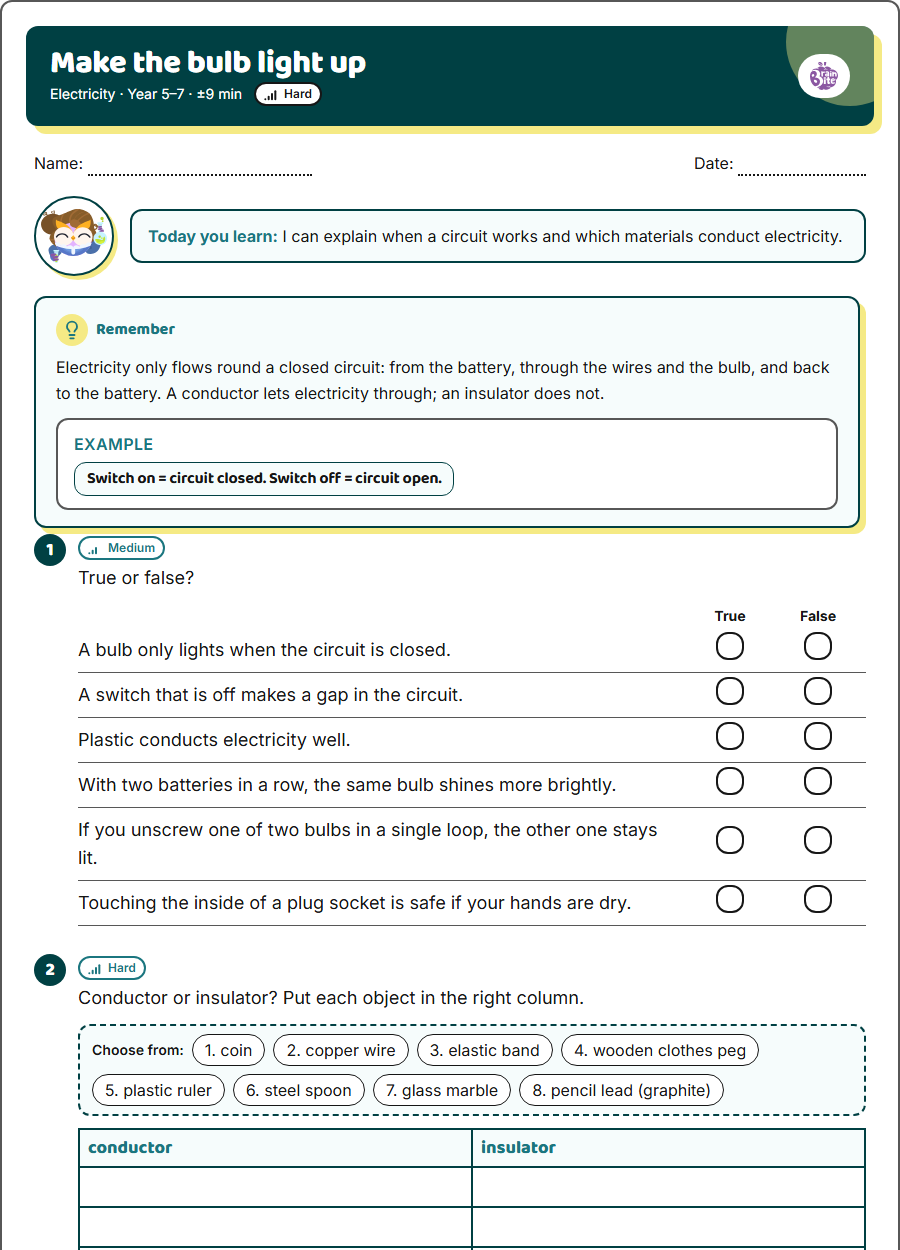
You explain when a circuit works and which materials conduct electricity.
Download the worksheetPDF, with an answer sheet for you.
For most children, Year 7 is the first year of secondary school. In maths, ratio, percentages and negative numbers come in. Probability and simple powers follow. A sure grip on fractions and decimals helps a lot.
In maths, long division, fractions, decimals and graphs. In English, the past tense and linking words like however. And reading for evidence and opinion.
Most children are 10 when they start Year 6. They turn 11 during the year.
The key stage 2 tests are normally in May. Results come in July.
English reading, grammar, punctuation and spelling, and maths. Teachers assess writing and science themselves.
Keep practice short and regular. Talk about the tests as a normal part of school. Praise effort, not only scores.
Ten minutes a day is enough. Choose one subject or one topic at a time.
Yes. Every subject has a free first lesson. You can also try every lesson free for 7 days.
Start with one topic, like fractions or the past tense. Practise it short and often. Ask the teacher where to begin.
A lesson takes a few minutes. That fits easily into a busy day.
Every subject has a free first lesson. Pick one and start today.