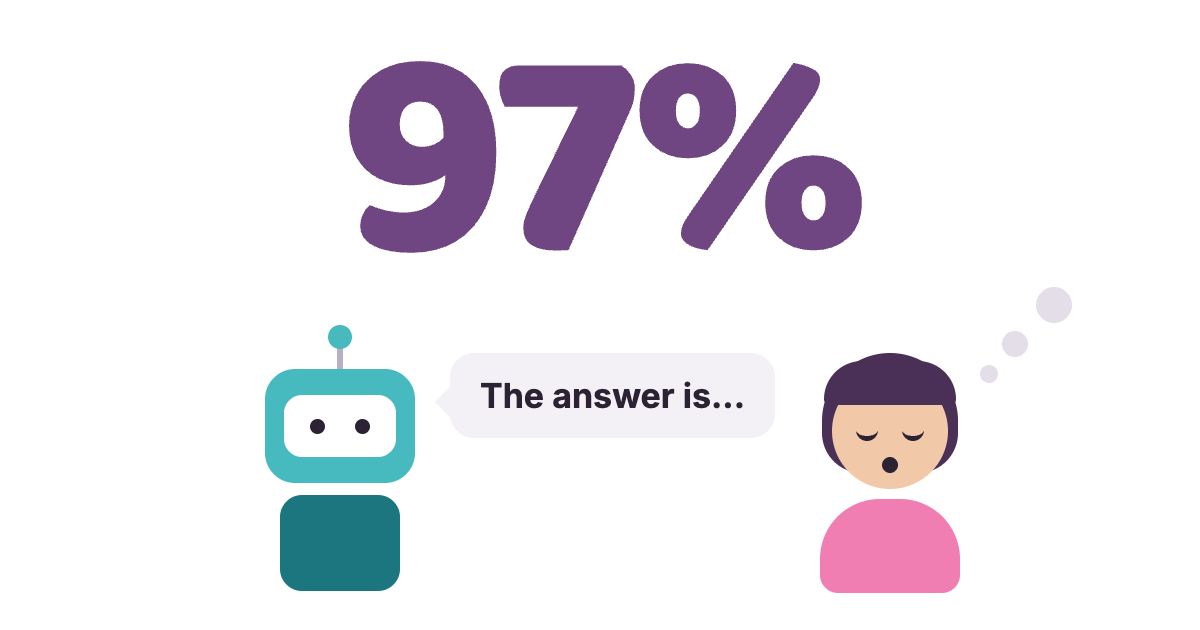
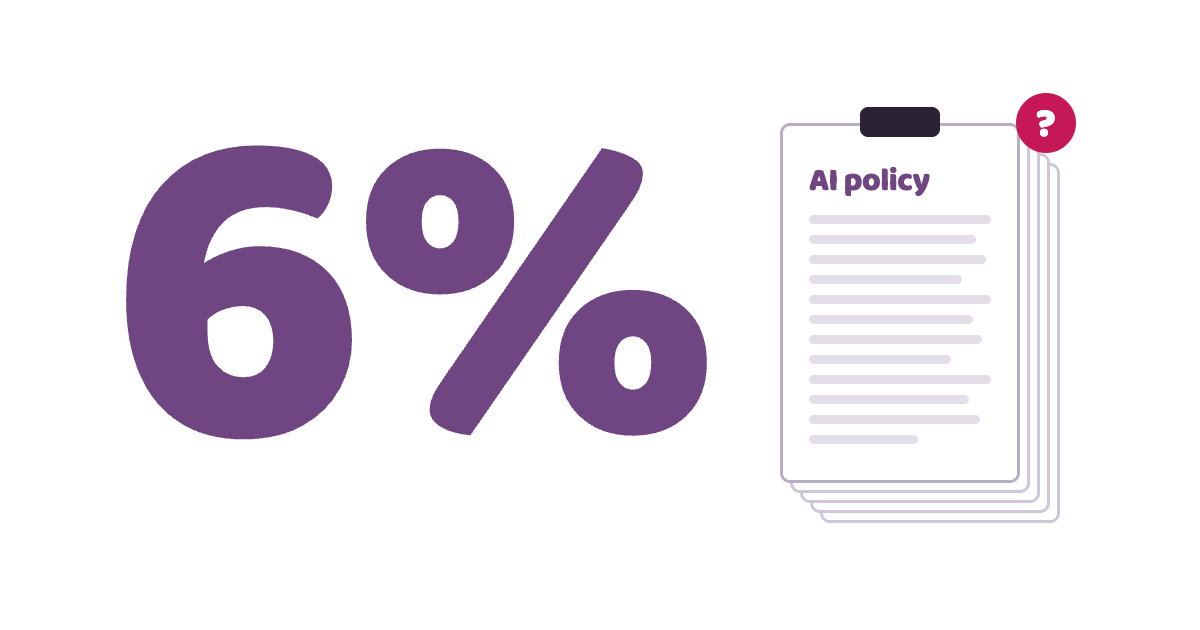
Stanford's AI Index for 2026 (opens in a new tab) contains a number that deserves more attention than it got. Asked whether their school's policies on AI were clear, only six percent of teachers said yes. Six. Not a majority, not a large minority. Roughly one teacher in every seventeen. Meanwhile, a UK survey of university students (opens in a new tab) found AI use rose from about two thirds to over nine in ten in a year. Policy is not just behind practice. It has barely left the building.
It is not that teachers are not paying attention
The easy reading of that number is that teachers have not read the policy. That is almost certainly wrong, or at least beside the point. If 94 percent of the people a document is written for cannot say what it asks of them, the document has failed. That is true of a user manual, a tax form or a school AI policy. The problem is not the readers. It is the writing.
Only six percent of teachers said their school's AI policy was clear.
Why AI policies end up unclear
Most school AI policies are written to protect the institution rather than to guide a teacher at ten past nine on a Tuesday. They are long, cautious and abstract. They talk about responsible use, academic integrity and data protection, all of which matter, and then leave the teacher to work out what that means for the actual assignment in front of them. Can a pupil use AI to brainstorm but not to write? Is it different in year one and year six? What about a child with dyslexia using it to read a text aloud? What do I do if I suspect a whole essay was generated? A policy that does not answer questions like these is not really a policy. It is a disclaimer.
What a usable policy looks like
It is short enough that a teacher actually reads it. It is organised around decisions, not principles: here is what is allowed, here is what is not, here is what to do when you are not sure. It is specific to age and task. What is fine for a sixteen-year-old writing an essay is not fine for an eight-year-old learning to read. It uses examples. Three real scenarios with a clear answer teach more than three pages of principles. And it names a person. Who do I ask? A policy with no one to ask becomes a policy nobody follows.
Some schools are already doing this
One response gaining ground is the school AI council: a small group of teachers, often with pupils and sometimes parents, who decide which tools come in and write guidance people can actually use. The value is not the committee. It is that the rules get written by people who will have to live with them. The United States Department of Education has also started pushing schools towards concrete questions for every tool (opens in a new tab): what learning problem does it solve, for whom, for how long, and what evidence is there. Questions like that turn a vague policy into something a teacher can apply.
What we do not know
The six percent figure comes from an American study. We do not know the Dutch number, and as far as we can tell nobody has measured it properly. That is worth fixing. If schools are going to make good decisions about AI, and if companies like ours are going to be held to clear standards, the first step is knowing whether the people in the classroom understand the rules at all. Our guess is that the Dutch number would not be much better. We would genuinely like to be proven wrong.
Take these with you
- 1Only six percent of teachers said their school's AI policy was clear.
- 2In one UK survey, student AI use rose from about two thirds to over nine in ten in a year.
- 3If 94 percent of readers cannot apply a document, the document failed, not the readers.
- 4A usable policy is short, decision-based, age-specific, full of examples, and names someone to ask.
- 5Nobody has properly measured the Dutch number yet. Someone should.