Listen to almost any debate about technology in schools and you will hear the word tech used as if it means one thing. Usually it means a few very large American companies. The European EdTech Alliance made a point this month that is easy to miss and worth repeating: Big Tech and Europe's education technology sector are not the same thing. And if Europe wants trustworthy technology in its classrooms, it cannot assume the second will survive on its own.
What European EdTech actually looks like
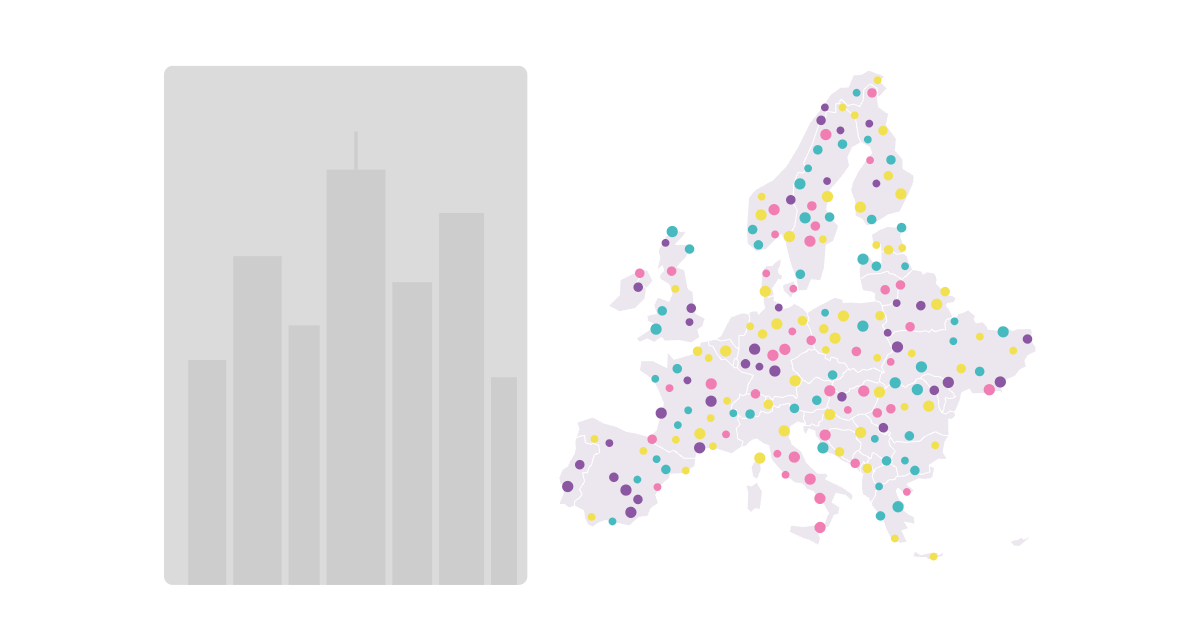
Most European education technology companies are small. They work across fragmented markets, in dozens of languages, with different curricula, different procurement systems and different readings of the same regulations. They build for the classroom in front of them: a Dutch reading lesson, a Finnish maths curriculum, a Polish school's way of buying software. That is a weakness when it comes to scale. It is also exactly what makes these companies valuable. They know the local context because they live in it. The European EdTech Alliance's map of the sector now lists more than 1,700 organisations.
European EdTech is mostly small companies building for local languages and curricula, not Big Tech.
Europe's policy is moving in our direction
A lot is happening at once. The Council of Europe has launched a new compass for governing AI and digital change in education, built around three ideas: governing the people and processes, education with AI, and education about AI. The European Commission is preparing an Education Package that looks set to shift the focus from more digital to better digital: stronger digital and AI skills, better support for teachers, more attention to evidence, and the infrastructure to make it work. It may even treat digital skills as a basic skill alongside reading, maths and science. And in her State of the Union, Ursula von der Leyen linked education directly to skills and jobs, and proposed restricting social media for children.
Access is not the whole story
One finding from Europe's Eurydice network deserves more attention. Comparing 38 European education systems, it found that unequal digital skills cannot be explained by access to technology alone. Gaps linked to family background persist even where schools have similar equipment. In other words: handing out devices does not close the gap. What happens in the classroom, how well teachers are supported and how technology is actually used matter far more. That is a strong argument for tools built close to those classrooms.
And a warning
Not all the news points the same way. A leaked proposal would reportedly allow AI companies to use Europeans' personal data to train models without consent. The European teachers' union federation responded with a line that is hard to argue with: students are not for data mining. Whatever happens with that proposal, it is a reminder of why it matters who builds the technology children use, and under which rules.
Building from Europe, for Europe
Some people argue schools do not need technology at all. In 2026 that is not a realistic starting point. Technology is already part of how children learn and live. The real question is whether it is good, trusted technology, used for the right reasons, in the right situations. We are one of those small European companies. We build for Dutch children first, in their language and their curriculum. If Europe wants more of that, it needs procurement that small companies can actually win, evidence standards that apply to everyone, and data rules that protect children rather than feed models. European EdTech will not survive by default. It has to be chosen.
Take these with you
- 1European EdTech is mostly small companies building for local languages and curricula, not Big Tech.
- 2European policy is shifting from more digital to better digital.
- 3Across 38 systems, unequal digital skills could not be explained by access to technology alone.
- 4A leaked proposal on training AI with personal data shows why it matters who builds children's technology.
- 5European EdTech will not survive by default. It has to be chosen.