EdTech Partnerships wrote a sharp piece on where EdTech has been and where it might go. It describes three phases. It also admits, refreshingly: "I have no idea what EdTech 4.0 will look like." Here is the short version, and what it means for a small company like ours.
1.0 counted users
The first phase was about scale and adoption. Users, engagement, downloads. It gave us interactive whiteboards, which the piece describes as "little more than sophisticated projectors", MOOCs, and one laptop per child. Big promises, lots of hardware, and outcomes that mostly faded.
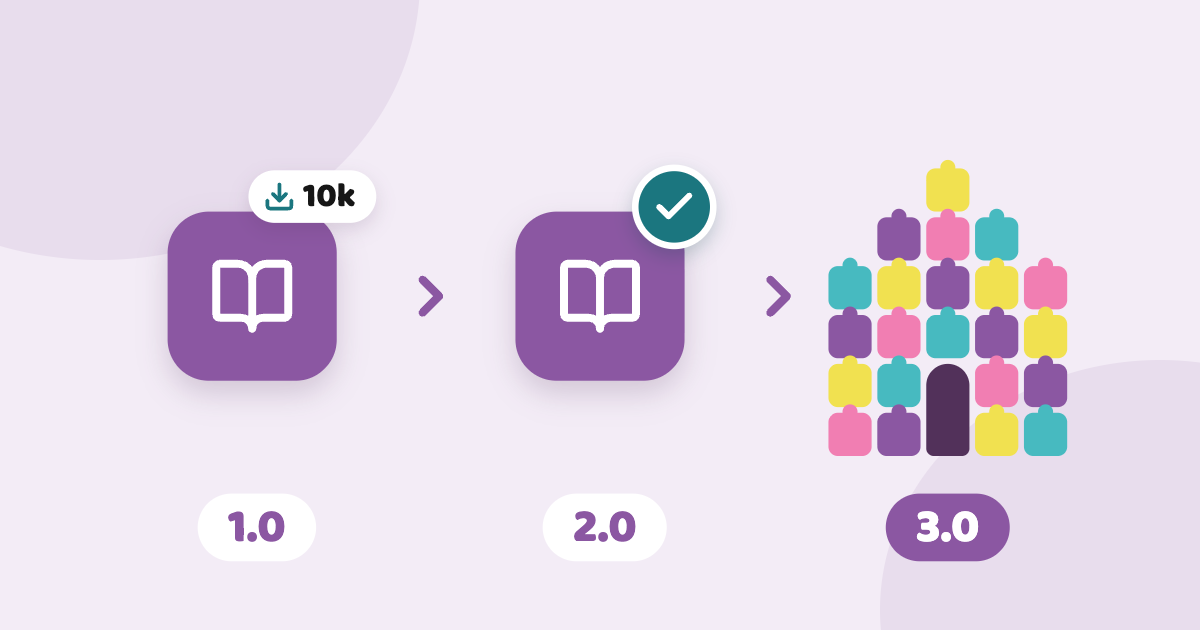
EdTech 1.0 counted users. 2.0 asked for evidence. 3.0 looks at the whole system.
2.0 asked for evidence
The second phase asked better questions. Does it work? For whom? Under what conditions? At what cost? That was real progress. But the evidence stayed fragmented, and it still centred on single tools. Every product proving itself on its own, in its own way. The author puts it well: "we had improved the instruments, but perhaps we had not fully changed the unit of thinking."
3.0 looks at the whole system
In the third phase, "the unit of analysis becomes less the individual tool and more the ecosystem." Shared standards. Shared evidence infrastructure. Governance. The conditions that let many tools work together in one school. The piece points to a New York Times ranking in September of ideas for fixing US schools, where frequent small group tutoring during the school day scored among the highest. The digital equivalents it names are not apps. They are reliable digital assessment, accessible materials, interoperability standards and teacher professional development.
What that means for a small company
It is a humbling idea for anyone building a product. In 3.0, no single tool should matter more than the system it sits in. For us that means a few things. Fit into how Dutch schools already log in, share data and decide, rather than asking them to work around us. Be honest about where we are still a 2.0 company, proving one product at a time. And measure ourselves on whether the school works better, not on how much our app gets opened.
The question to ask
When a school looks at a new tool, the 1.0 question was how many people use it. The 2.0 question was does it work. The 3.0 question is: does it make everything else work better, or is it one more thing to manage?
Take these with you
- 1EdTech 1.0 counted users. 2.0 asked for evidence. 3.0 looks at the whole system.
- 2The most promising digital investments are often infrastructure, not apps.
- 3A good tool fits into how a school already works.
- 4Ask whether a tool makes everything else work better, or adds one more thing to manage.