
Maths
- Numbers to 100 as tens and ones
- Counting in 2s, 5s and 10s, and odd and even numbers
- Adding and taking away within 20, also across ten
- Doubles, near doubles and number bonds
- Finding the missing number in a sum
- Turning a short story into a sum
Year 2 practice at home starts with knowing what your child learns this year. Sums grow to 100 and sentences get capital letters and full stops. Reading moves from sounding out to understanding. Below you see it subject by subject.
Every subject has a free first lesson. Pick one and start today.
Year 2 is the last year of key stage 1.
Your child now works with numbers up to 100. Adding and taking away across ten becomes quicker. In writing, a sentence needs a capital letter and a full stop. Question marks and exclamation marks join in too. In reading, the focus shifts to what a story means. Why did something happen, and what comes next? Short, regular practice helps all of this stick.
Read together every day. Ask what happened and why.
Practise one thing a week, like doubles or a few tricky words.
Let your child explain how they worked it out. You will see where they get stuck.
Each lesson takes a few minutes. A mentor explains every step at your child's pace. The explanation adapts to your child. As a parent, you see what goes well and what needs more practice.
Print a worksheet and practise together on paper. Each one has an answer sheet.
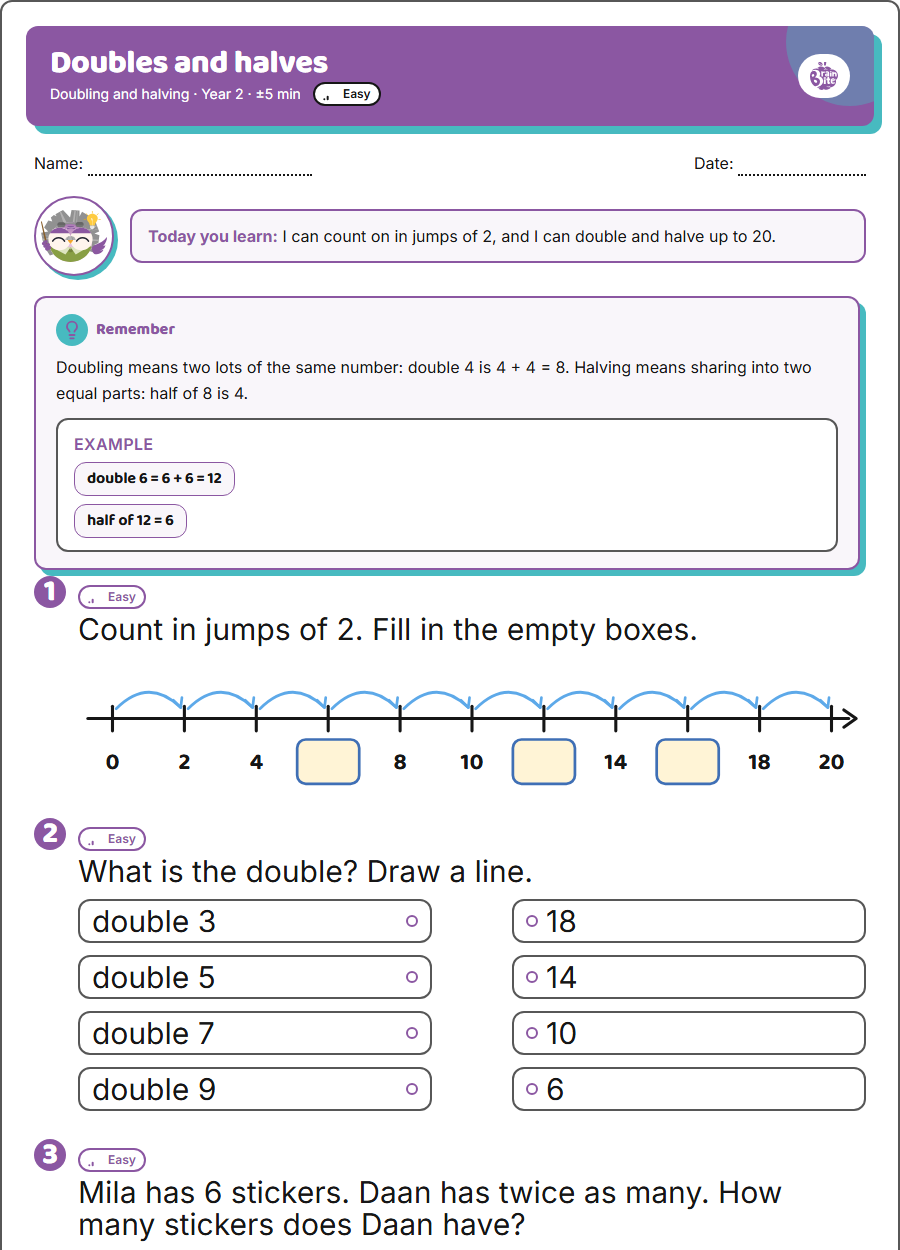
You count in jumps of 2 and double and halve up to 20.
Download the worksheetPDF, with an answer sheet for you.
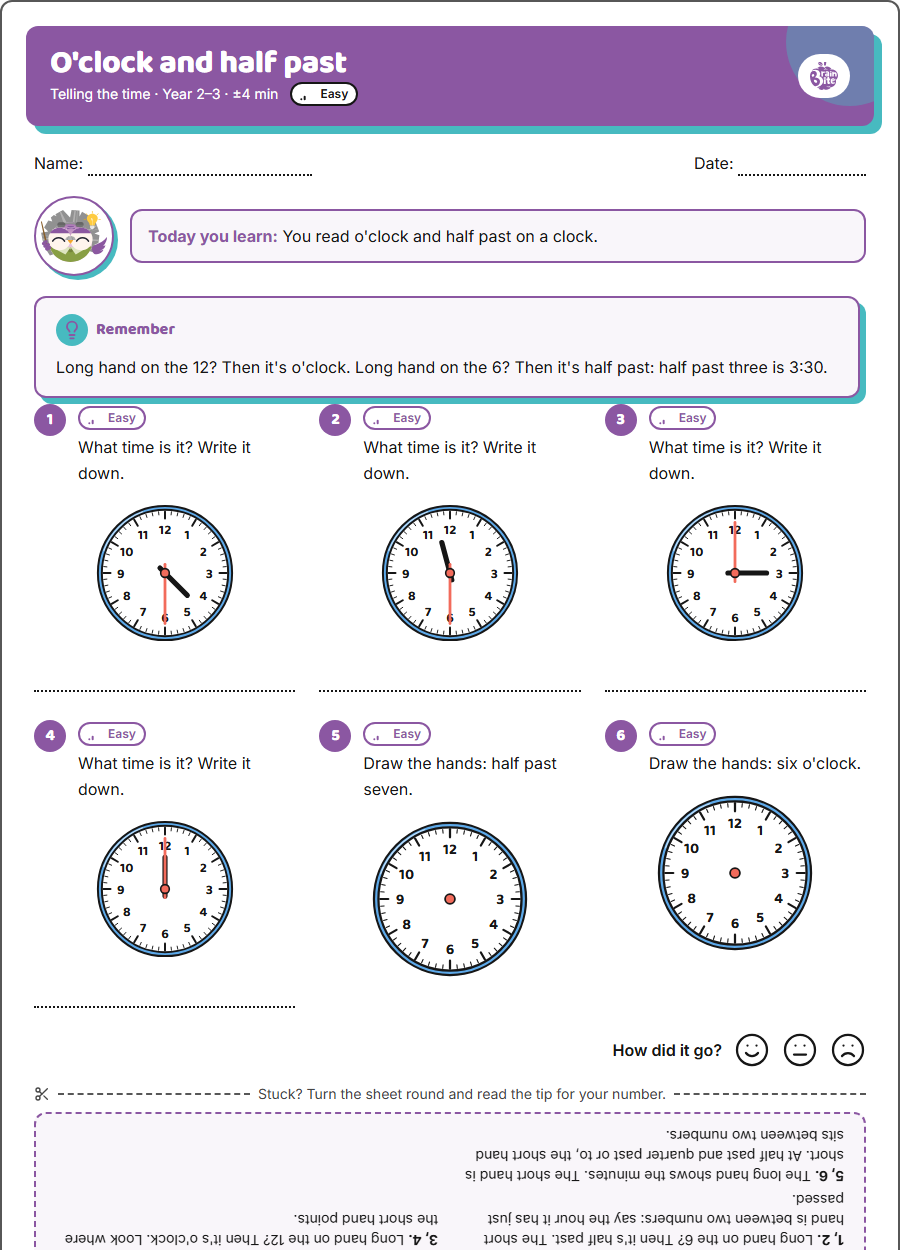
You read o'clock and half past on a clock.
Download the worksheetPDF, with an answer sheet for you.
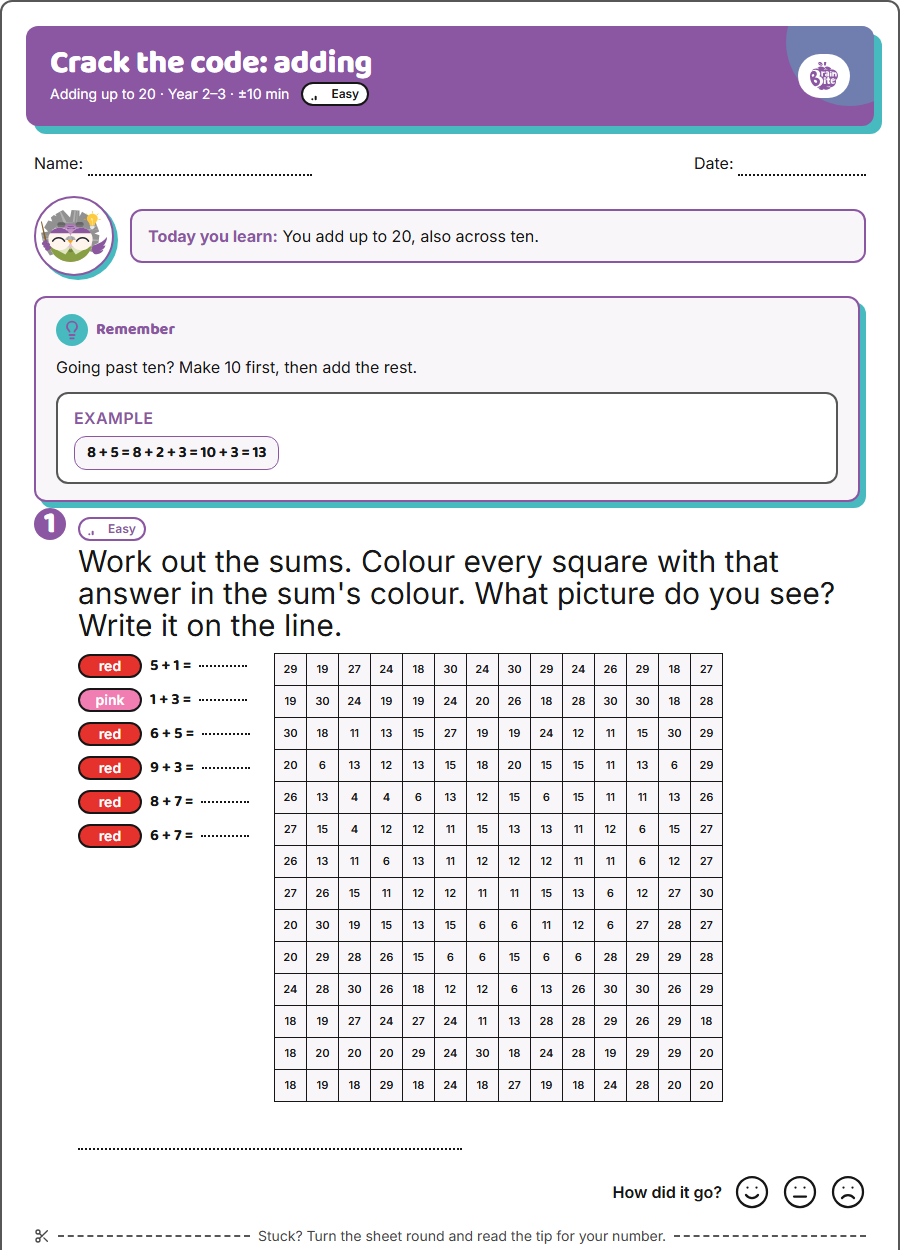
You add up to 20, also across ten.
Download the worksheetPDF, with an answer sheet for you.
In England, the key stage 1 tests are optional for schools. Schools that use them normally hold them in May. They cover reading, grammar, punctuation and spelling, and maths. Children who missed the standard in the Year 1 phonics check take it again. That happens in June.
In Year 3 your child starts the times tables in earnest. Telling the time to five minutes comes next. Writing grows into longer sentences. Children who know their number bonds well find Year 3 maths easier.
In maths, numbers to 100, adding and taking away and doubles. In English, capital letters, full stops and spelling patterns. And reading for meaning, not only sounding out.
Most children are 6 when they start Year 2. They turn 7 during the year.
The key stage 1 tests are optional for schools in England. Ask your child's school whether it uses them.
Your child takes the check again in Year 2. Practise sounds and short words a little every day. The school will tell you how it supports your child.
Ten minutes a day is enough. Choose one subject or one topic at a time.
Yes. Every subject has a free first lesson. You can also try every lesson free for 7 days.
Read a short story together. Then ask why something happened. Let your child point to the answer in the text.
A lesson takes a few minutes. That fits easily into a busy day.
Every subject has a free first lesson. Pick one and start today.